Trim size affects how a book looks, reads, prints, ships and fits within its market.
Choose it before final formatting and cover design—not after the files are finished.
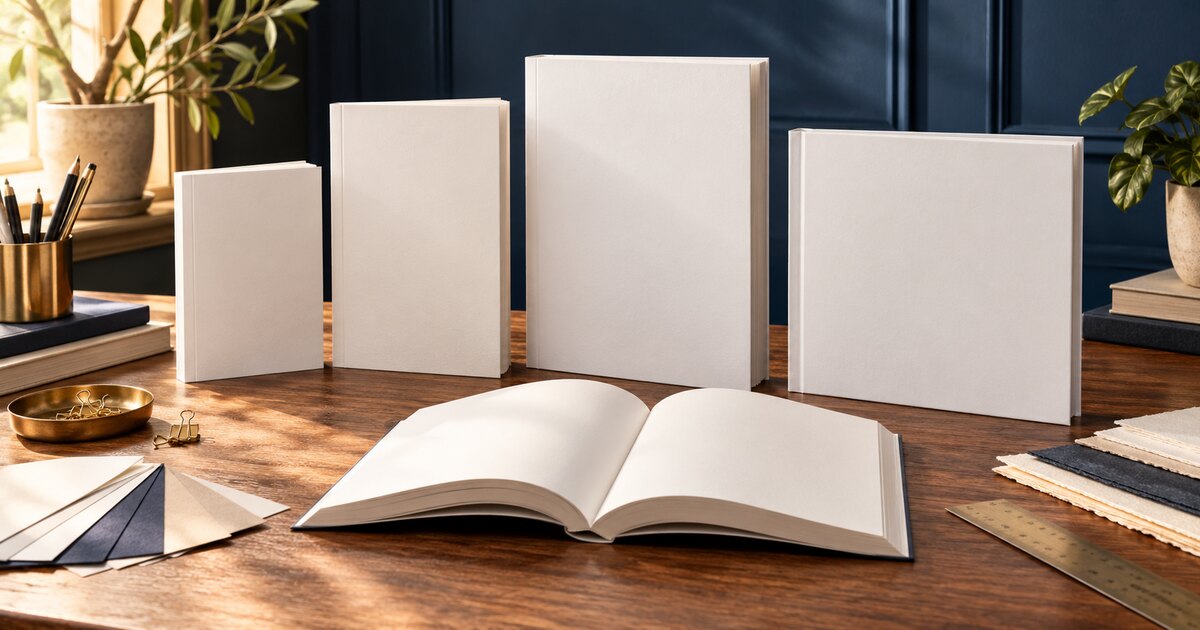
Trim size is the finished width and height of a printed book after its pages are cut. A 6-by-9-inch paperback, for example, is designed to measure approximately 6 inches wide and 9 inches tall when manufacturing is complete. That choice influences the page layout, spine width, cover template, printing cost, page count and the physical experience readers have with the book.
Authors sometimes treat trim size as a late design preference. In reality, it should be selected before final interior formatting. Changing it later causes text to reflow, alters the page count and can make an existing cover template unusable. A deliberate decision at the beginning prevents avoidable rework near publication.
A smaller page generally holds fewer words, which can increase the final page count and spine width. A larger page can reduce page count, but it may make a short manuscript feel visually sparse if typography and margins are not handled carefully. Dimensions also affect the amount of room available for illustrations, tables, footnotes, exercises and other designed elements.
Production economics matter too. Barnes & Noble Press explains that print cost depends partly on format, trim size, page count and interior color. A decision that looks attractive on screen may create a minimum retail price that does not fit the author’s market. Compare specifications and estimated costs before locking the format.
Most novels, memoirs and narrative nonfiction use comfortable portrait formats. Barnes & Noble Press identifies 5.5 by 8.25 inches as a popular trade-paperback size and 6 by 9 inches as a popular trade-hardcover size. A 5-by-8-inch or 5.5-by-8.5-inch book can feel compact and personal, while 6 by 9 inches provides more space and is common for longer manuscripts.
Genre conventions are useful, but they are not commands. Examine comparable professionally published books. Notice how easily they can be held, how many words appear on a page and whether the chosen size supports the expected tone.
Books with headings, lists, charts, citations or worksheets often benefit from a slightly larger page. A 6-by-9-inch format is flexible for general nonfiction. Larger dimensions such as 7 by 10 inches may work better when the content needs wide tables, exercises or substantial visual structure. The goal is not simply to fit more words; it is to protect readability and hierarchy.
Picture books need enough room for artwork and expressive page turns. Square or landscape formats can support illustration-led storytelling, while portrait formats may suit educational or chapter-based children’s books. B&N Press lists 11 by 8.5 inches and 8.25 by 11 inches among traditional children’s-book sizes. Before committing, confirm that the intended printer supports the selected orientation, color option, binding and page count.
Cookbooks, manuals, journals and activity books may need larger pages for photographs, instructions or writing space. B&N Press lists designed-book options including 7 by 10, 8 by 8, 8 by 10 and 8.5 by 11 inches. A larger format can improve usability, but it can also increase manufacturing and shipping costs. Test a printed sample at actual size instead of judging only from a monitor.
Trim size is the final page dimension. Margins keep text and important content away from the cut edge and binding. Bleed is extra artwork extending beyond the trim line so a full-page image can be cut without leaving an unintended white strip.
Amazon KDP currently instructs authors to extend bleeding artwork 0.125 inch beyond the trim edge. Its formatting guidance also increases the required inside margin as page count grows: the binding consumes more space in a thicker book. These technical settings must be built into the interior file; they should not be improvised after export.
Printing and cutting are mechanical processes, so small movement can occur. Keep faces, page numbers, captions and essential text comfortably inside the safety area. Decorative backgrounds can extend through the bleed, but critical content should not sit on the trim line.
A full print cover is not just the front image. Its total width depends on the back cover, front cover, bleed and the spine, and spine width depends on the final page count, paper and binding. KDP specifically requires a finished interior and page count before calculating cover dimensions.
B&N Press likewise warns that if the page count or trim size changes, the original cover template no longer matches and a new template must be downloaded. Never stretch an old cover PDF to fit new specifications. Rebuild it on the correct template and recheck the spine, barcode area, bleed and safety zones.
If the book will be published through KDP, B&N Press, IngramSpark or another printer, identify a size and production combination supported by every intended channel. IngramSpark offers many standard sizes and certain custom options, but its available ranges vary by binding and paper. B&N Press uses a defined list and does not accept sizes outside it.
Using one compatible trim size can simplify interior files and metadata. However, do not assume that identical dimensions mean identical cover templates: spine calculations and manufacturing requirements can differ. Download the official template for each printer after the final specifications are known.
The US Publisher can compare suitable trim sizes, format the interior, prepare printer-specific cover files, review bleed and safety areas, and organize proof corrections. The recommendation should be based on the actual manuscript, illustrations, page count, formats, distribution plan and budget—not a one-size-fits-all rule.
Call +1 737-282-5860 or email info@theuspublisher.com to request a print-readiness assessment. Platform acceptance, manufacturing results, pricing, distribution and sales remain subject to the selected printer and retailer; no particular outcome is guaranteed.
Official resources: KDP Trim Size, Bleed and Margin Guidance, KDP Cover Preparation, B&N Press Trim Sizes and Paper Stock, B&N Press Cover Template Guidance, and IngramSpark File Creation Guide.
Information verified October 19, 2026. Platform specifications can change; always check the latest official requirements before preparing final files.
The cost depends on several factors, like the book size, type of book, format, number of pages, and other services you wish to utilize. You may contact us for a free estimate!
You will! We may do all the work, but it was 100% your idea, and thus you get full ownership of your entire book!
We have worked with thousands of amazing aspiring authors like you, and we have gained their trust, and we’re confident that we’ll achieve yours, too!
Without customer support and constant communication, we won’t be able to write your book the way you want it. Our support team is available at your beck and call!
The book writing process typically depends on the length of the book and the frequency of modifications; however, a 200-page book takes about 2-3 months.
You’re subject to 100% refundability if unsatisfied with the first chapter!
 Autobiography
Fiction
Non-Fiction
Children’s Book
Self-Help Book
Travelogue
Photobook
Other